
Your shopping cart is currently empty.
Caring for your Musical Instrument
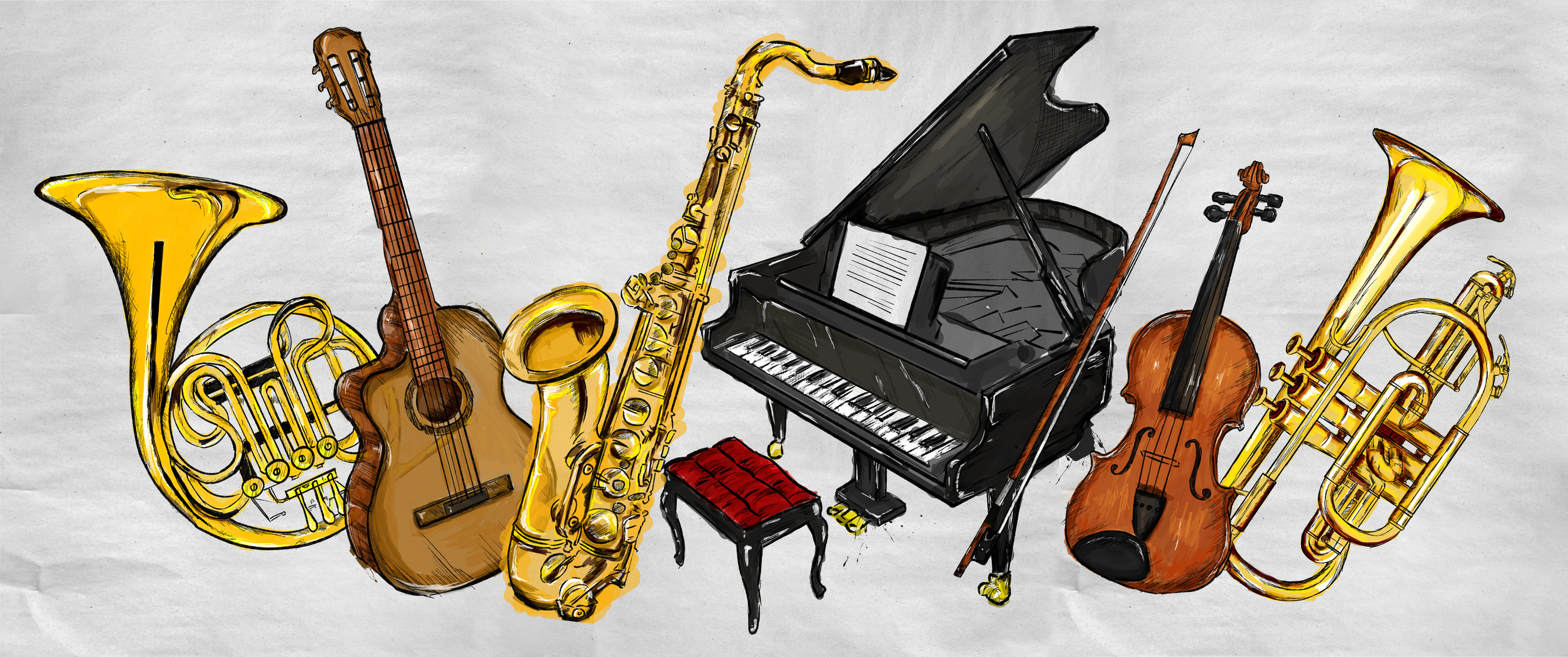
Proper care and maintenance of your musical instrument is essential to ensure it stays in top condition and playing quality. Our PM Music Center Musical Instrument Care Guide shares best practices for daily and annual maintenance for all instruments along with specific tips for string, woodwind and brass instruments. Bookmark this guide to keep your instrument playing in perfect harmony all year long.
Daily Musical Instrument Care Tips
Instrument Cleaning:
Gently clean your instrument after each use.
- Use a soft, clean, non-treated cloth to clean off any finger prints and every day dust or residue prior to storing.
Instrument Storage:
- Always store your instrument in its case when not in use. This protects your instrument from excess dust, sunlight, and accidental damage.
- Store in a good quality case, one that is sturdy, lined, and has secure hinges or zippers.
- When returning your instrument to its case, make sure it is situated properly within all the correct indentations. If you have to force your case closed, double check positioning and readjust.
Temperature:
- Avoid exposing your instrument to any harsh temperatures whenever possible. Instruments are quite sensitive to extreme temperature fluctuations, which can cause warping or serious structural damage.
- For those in winter or dry climates, humidifying your instrument’s case is a great way to offset temperature fluctuations to prevent damage or cracks. If you decide to get a humidifier for your case, keep it around 35-45% for optimal storage. This is especially important for string and woodwind instruments.
- If your instrument is being brought inside from colder temperatures, allow a few minutes for your instrument to warm up to room temperature before playing. Simply leaving your case open before assembling the instrument for a few minutes to adjust is a great way to do this.
Handling with care:
- Avoid eating or drinking near your instrument to minimize exposure to any spills.
- Always wash your hands before playing to keep oils and acids from damaging it.
- Avoid eating or drinking sugary things before playing, and always rinse your mouth out before playing a wind instrument.
Annual Musical Instrument Care Tips
Regular Professional Check-ups:
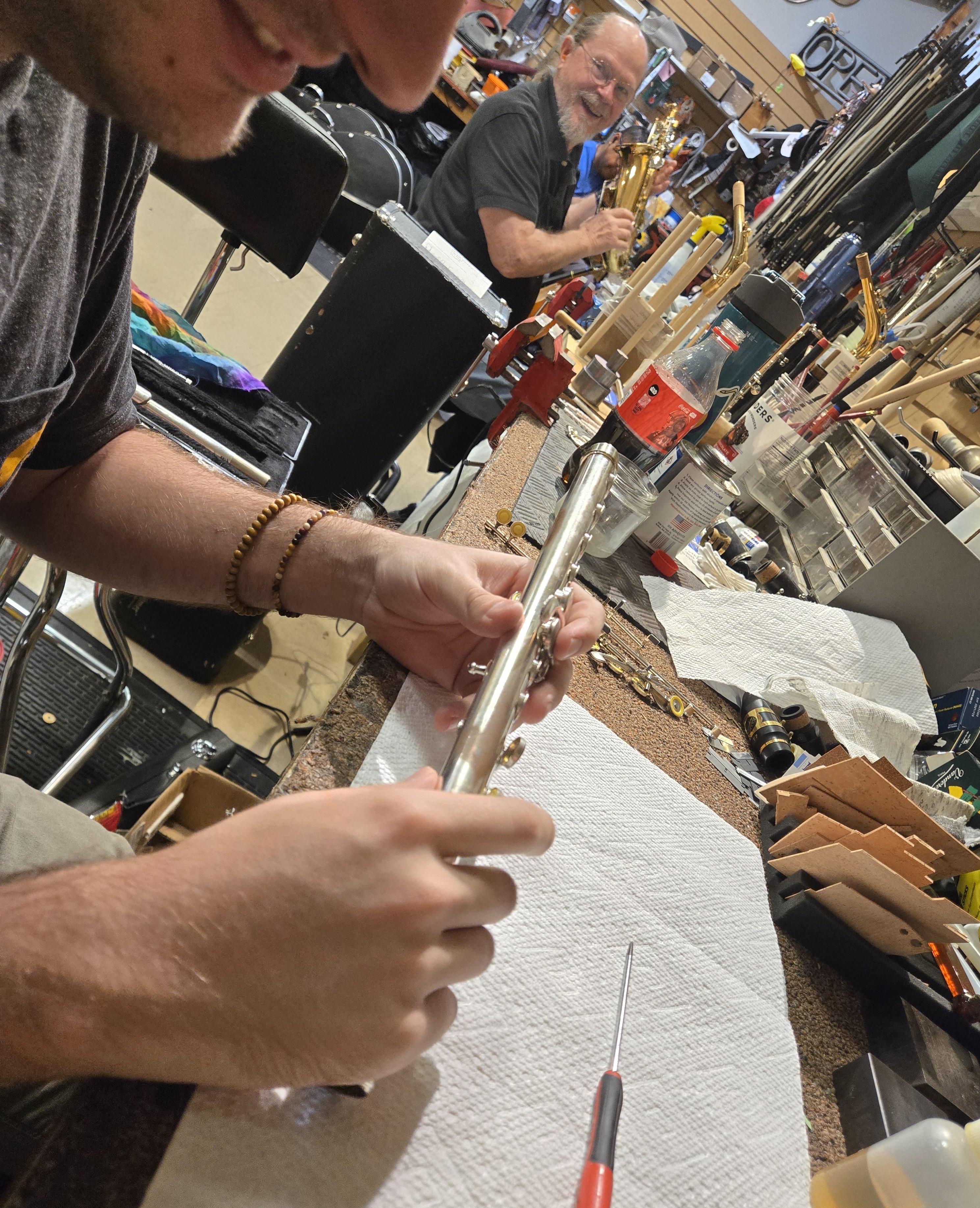
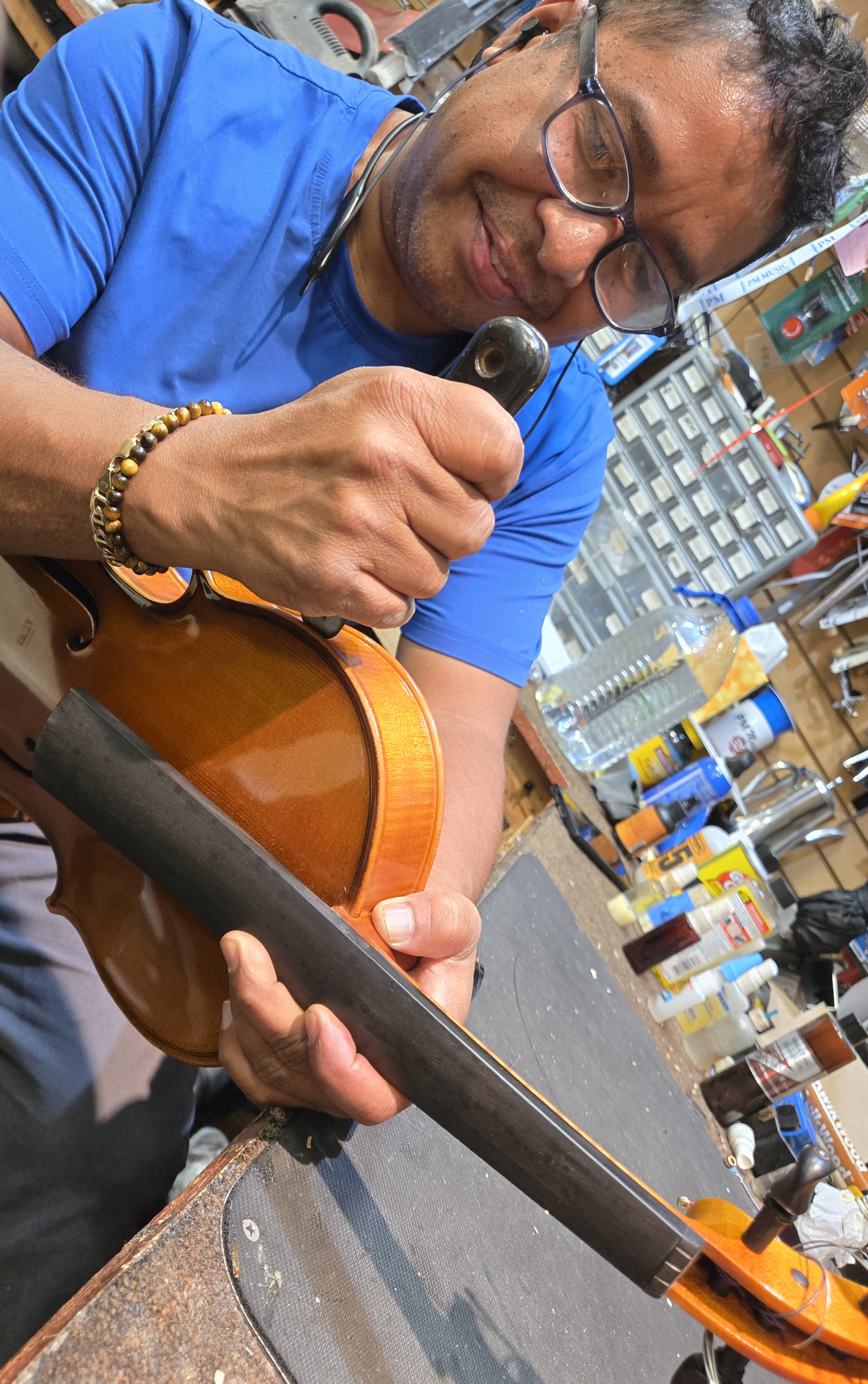
- Just like we all need our yearly check-ups, your instrument will also benefit from regular professional maintenance. Professional check-ups will include a deep cleaning and instrument inspection, and are a great way to identify and address any potential issues early on.
- If you’re renting, your rental program likely provides annual maintenance and care services (check out the Ultimate Guide to Renting to learn more about rental programs).
- For instrument owners, your local retailer will often offer annual care and maintenance services, some may even offer discounts for continuing customers.
No DIY:
While it may be tempting to try to diagnose and repair your instrument on your own, avoid attempting to repair an instrument at home.
If an issue arises or a possible repair is needed, it is highly recommended to take your instrument to a trained instrument repair technician.
 |
 |
Specific Musical Instrument Care: String, Woodwind, Brass
Caring for Strings Instruments
- Always set your instrument down string-side-up, even when in its case.
- Tune your instruments often to ensure they maintain the best sound quality.
- Take special care to remove any remaining rosin dust after every practice session.
- Use instrument polish every two to four weeks to keep rosin from building up on your instrument.
- Replace your instrument’s strings every 9-12 months. Old strings will start to sound dull and become unresponsive, or return a “false” note.
Pro tip: When changing your strings for the first time, it can be helpful to work with your instructor or local instrument retailer who can help show you the best techniques for your unique instrument. Plus, they’ll be able to offer some great advice, i.e. don’t replace all your strings at once, instead replace them gradually so as not to reduce tension. - Don’t use commercial or household cleaners and solvents on your instrument. If you do need to use a polish or cleaner, purchase specialized products from a music retailer.
Pro tip: When using a new product, if possible, first test it on an inconspicuous spot to ensure compatibility with your varnish. - Take good care of your bow!
- Loosen your bow each time after playing This prevents the hair from stretching, maintains the curve of the stick, and will better protect the bow against other accidental damage.
- Avoid directly touching the hair of your bow, as finger oils can keep rosin from sticking.
Check out our video on string instrument care and maintenance for some helpful demonstrations!
Caring for Woodwind Instruments
- After each use and before storing your instrument, pull a clean, dry swab through your instrument. This will ensure you have removed any internal moisture, which can cause cracks or mildew.
- Gently wipe key pads of moisture prior to storage. Take extra care not to bend the keys when cleaning and assembling!
- When assembling and disassembling your instrument, avoid excessive force, which could lead to damage or misalignment.
- Cleaning:
- For flutes: use a cleaning rod with a soft swab, such as cheese cloth, to clean the inside of the instrument.
- For most other woodwinds use a weighted cloth, ideally one designed for your specific instrument.
Pro tip: Make sure to store your swabs outside of the case to prevent mold and mildew. - Clean mouthpieces in warm, soapy water, and let them dry completely before storing.
- Always store your reed in a holder, rather than on the mouthpiece.
- Periodically check your key mechanisms for loose screws. If a key feels loose, tighten the pivot screws until there is no noticeable wobble.
- Oil your instrument’s keys every 12 months, ideally with the manufacturer’s key oil.
Pro tip: A tiny bit of product goes a long way! Ask your band director or local music retailer for help when oiling our instrument for the first time. They can help you ensure you’re using the right amount in the right places. - For saxophonists, always use a tenon plug when you store your instrument. Plugs help prevent damage to the octave mechanism within the body of the instrument, which, if bent, can knock your horn out of adjustment and will prevent most notes from making the proper sound.
Check out our video on woodwind instrument care and maintenance for visual demonstrations!
Caring for Brass Instruments
- Always remove your mouthpiece after playing, and ensure that your instrument is completely dry prior to storing it in its case. Drain any water and wipe your instrument dry with a clean, soft cloth. For deep cleaning, you can use soap and water with a mouthpiece brush.
Pro tip: Once your mouthpiece is dry, it can be helpful to apply a thin layer of valve oil to the bore. - If possible, avoid eating, drinking (anything other than water), or chewing gum immediately prior to playing your instrument.
- Ensure you move all possible parts at least once every few weeks. Brass elements can stick together when left untouched or unmoved over long periods of time; exercising them is a great way to ensure they stay in good playing condition.
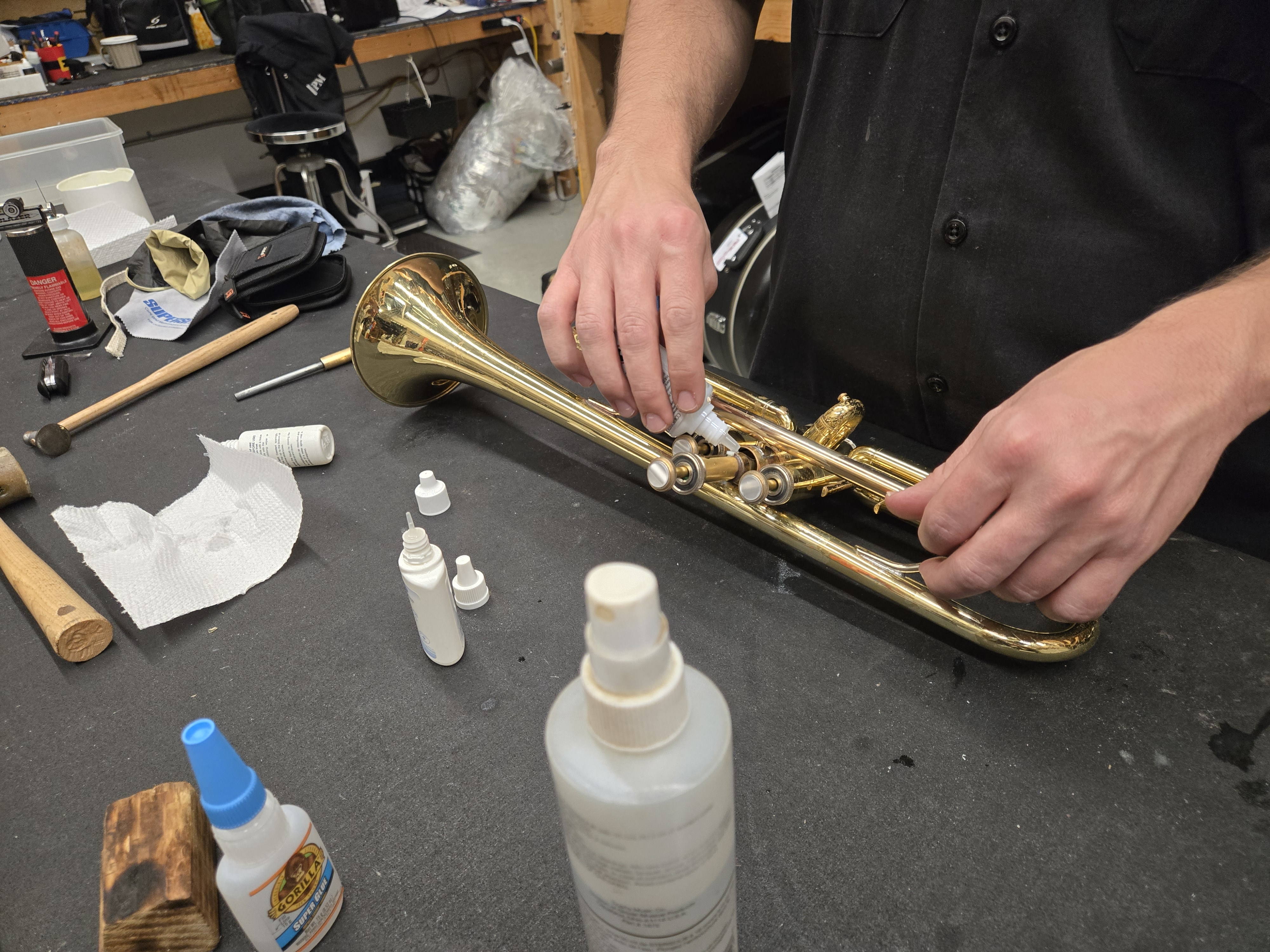
- Make it a habit to oil horn key valves 2-3 times per week. Place a drop or two on bearings and rotors, and work the valves a few times to ensure the oil spreads evenly.
- For trumpets, unscrew valves, wipe them clean, then place a drop of valve oil (enough to coat the entire valve). Also apply oil to the valve cap and bottom cap.
- For trombones, apply slide oil at least once a week, placing the hand slide into third position and adding oil to each slide.
Pro tip: Lanolin oil (or similar quality oils) can be great for lubricating your tuning slides.
- Yearly professional cleanings are a great way to preemptively spot issues early on, avoiding costly repairs or potential future corrosion. They also provide you with a great opportunity to have dents repaired by a professional (avoid trying to hammer those out on your own!).
Check out our video on brass instrument care and maintenance for visual demonstrations!
Taking care of your instrument is an integral part of being a musician. These quick and easy steps will go a long way to ensure your instrument will remain in great working condition for years to come.
Questions about instrument care?
Stop by PM Music Center to learn more about instrument care, as well as our maintenance, and repair services today!