Your shopping cart is currently empty.
The Ultimate Guide to Musical Instrument Rentals
Whether you’re joining the school band or orchestra, curious to finally pursue your passion for music, or not quite ready to commit to a purchase, renting an instrument is a great option. In order to help you understand your options and identify the best instrument to meet your goals, we’ve put together this guide filled with questions to ask, where and how to rent, and what to look for. This expert guide will help make your rental journey easier!
Top Benefits of Renting | Rental Programs | What to Ask when Renting | Choosing a Rental Instrument | Best Instruments to Rent | Instrument Rental Care | Pro Tips | PMMC Rental Program
Top Benefits of Renting an Instrument
Below are some of the many advantages of renting a music instrument, especially if you’re early on in your music education.
- Cost Effective: The affordability of renting often attracts many musicians, especially those new to their musical journey. If you are hesitant to invest money in a brand new or used instrument, renting is a great solution. Most rental programs are specifically designed to be more affordable and well suited to the budget needs of someone new to music or looking to experiment with different types or levels of instruments. Renting an instrument is a cost effective alternative, with less commitment and more flexibility.
- Low Commitment: Many musicians, especially those just starting out, are more comfortable with renting because it is low commitment. Most rental programs offer month-to-month and rent-to-own plans which minimize your commitment but also allow you to work towards ownership if that is of interest at any point. If you’re a student who has never played an instrument before, renting can be a nice way to get familiar with the instrument. It allows you to get to know your instrument of choice and learn what a music practice is like, before making the commitment to purchase your own piece.
- Flexibility: Unsure of what instrument you want to pursue? Renting gives you the most flexibility to experiment and learn what fits your style and interest before making a bigger financial investment.
- Try Before You Buy:
- If you’re new to playing an instrument, you might have your eyes set on one specific instrument and think it’s the perfect fit for you. But for some, they purchase an instrument, take a few lessons, and then realize they would actually prefer to pursue a different one. Maybe you start with a trombone, but then realize trumpet is more your style. Or maybe your passion for violin becomes a passion for the cello. Renting an instrument allows you the option to try out one, two, three, or even more instruments before making a bigger financial commitment, in order to figure out which one is best suited to you.
- Renting can also be a great option for established musicians. Maybe you’re a seasoned pianist, interested to learn more about the mechanics of the saxophone, but don’t want to commit to purchasing an entirely new instrument just for a few months of exploratory practice. Or perhaps you’re a multi-instrumentalist/virtuoso, in need of a rental for the concert season. For established musicians interested in expanding their horizons or re-igniting a second instrument practice, high quality professional level rentals can be a great option.
- It’s Easy To Level Up: Instruments are not one size fits all; in fact, most instruments are available in different styles and sizes, each suited to different levels of practice.
- Easy way to keep pace with your progress: While beginner or student model instruments are structured for those who are just starting out, they often have some modifications that professional model instruments don’t. As you continue practicing, you and your instructor will decide when you’re ready to progress to an intermediate, and eventually an advanced professional level instrument. Some students begin their music education and realize they’re able to progress rather quickly, in which case renting your first few models before investing in your professional piece can be the smartest approach. Check out our article on step-up instruments to read more about progressing between beginner, intermediate, and advanced/professional level instruments.
- Still growing? Renting an instrument is also highly recommended for younger students. As they grow physically, they’ll want their instrument to grow in scale with them too. Instruments such as violins, violas, and cellos come in vastly different sizes to accommodate growing students and may need to be upgraded as often as annually. Rather than having to buy a brand new instrument every year, rental programs allow access to affordable instruments that grow with you.
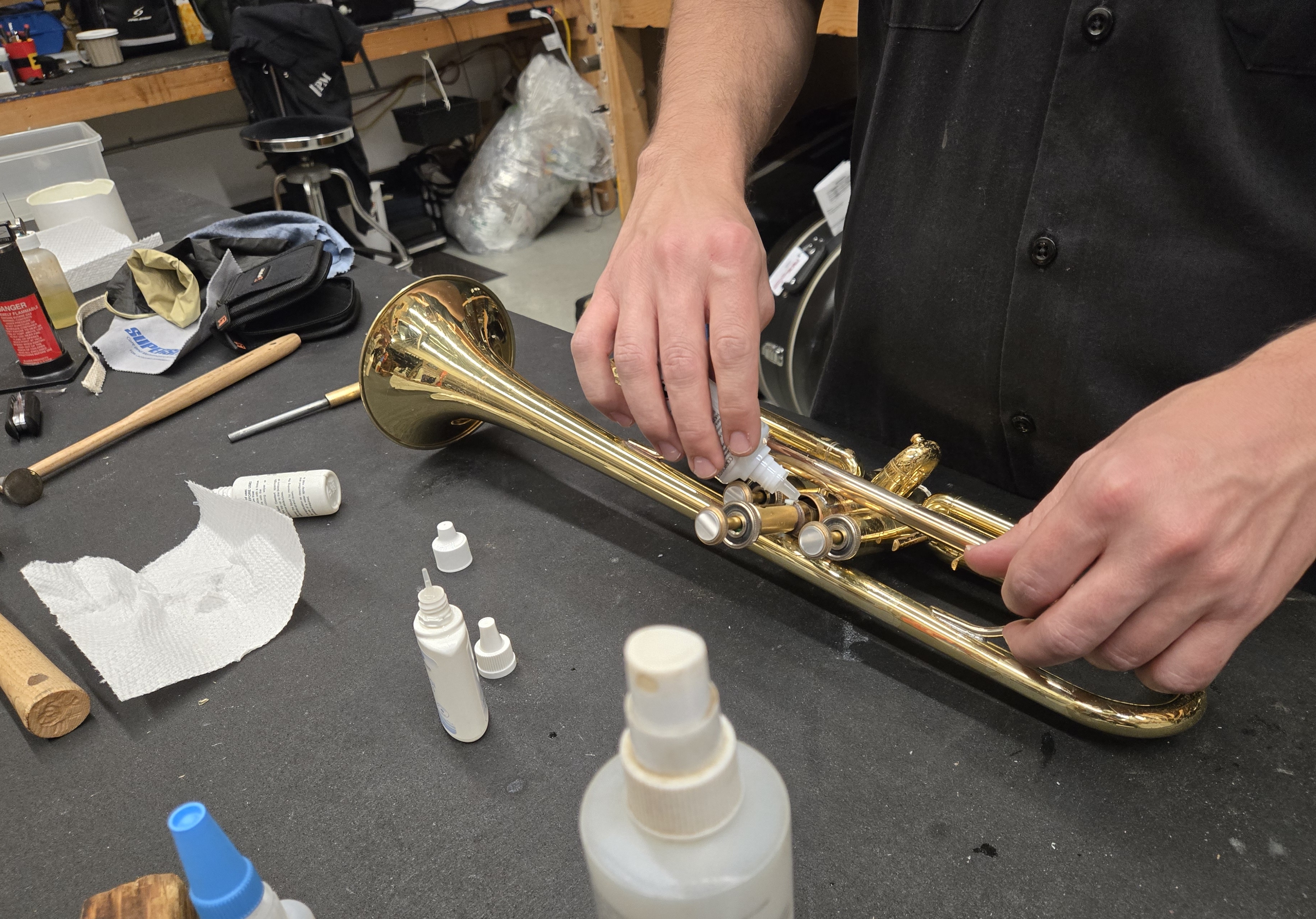
- Worry Free Expert Care & Maintenance: Instruments require annual care and maintenance. Renting a musical instrument can alleviate the worries of maintenance and repair, especially for new students who are unfamiliar with all that is required to keep your instrument in excellent playing condition. Most music instrument rental programs include maintenance and repair services, giving you access to experts who can help resolve any issues or answer questions as they come up. This can be especially beneficial to new students still getting familiar with their instrument of choice. Your music rental supplier can also work closely with you to provide guidance about at home care, helping you to get comfortable with the routines and responsibilities of instrument ownership.
Instrument Rental Program Options
There are various routes to take when renting, below are a few of the most common options and what to expect.
Music Store Rental Programs
- Local: A win-win, it’s convenient and you will be able to test the instruments in person, while also supporting a neighborhood store.
- Access to a team of experts: Whether you are picking your first instrument or ready to progress from one instrument to another, having a team of experts who know you and can work with you throughout your music journey adds great value. In addition, if and when you’re ready to buy, they’ll be there to help you select the best instrument make and model for your continued practice.
- Familiar with resources in your area: Beyond your rental, a local store will be tapped into many music resources including teachers, clinics, events and more.
- Not all retailers are created equal! Don’t hesitate to ask how they vet the quality of the instruments, which brands they offer, and about their testing, cleaning, and inspection procedures. A good program will provide you with not only a high-quality, well maintained instrument, but support along the way. Click here to jump ahead for our comprehensive list of best questions to ask before committing to a music store’s rental program.
Pro Tip: Every retailer has their own contract and terms, take the time to ask about what support and care you will receive with your rental.
School Rental Partner Programs
- Vetted Retail Partner: As a student hoping to play with your school’s band or orchestra, it is likely that they are already working closely with an established music retailer. While you aren’t usually required to use your school’s retailer of choice, there are often benefits to doing so. Schools work closely with local retailers to do the vetting on your behalf, ensuring that the instruments provided to their students are of good quality, sound, and condition.
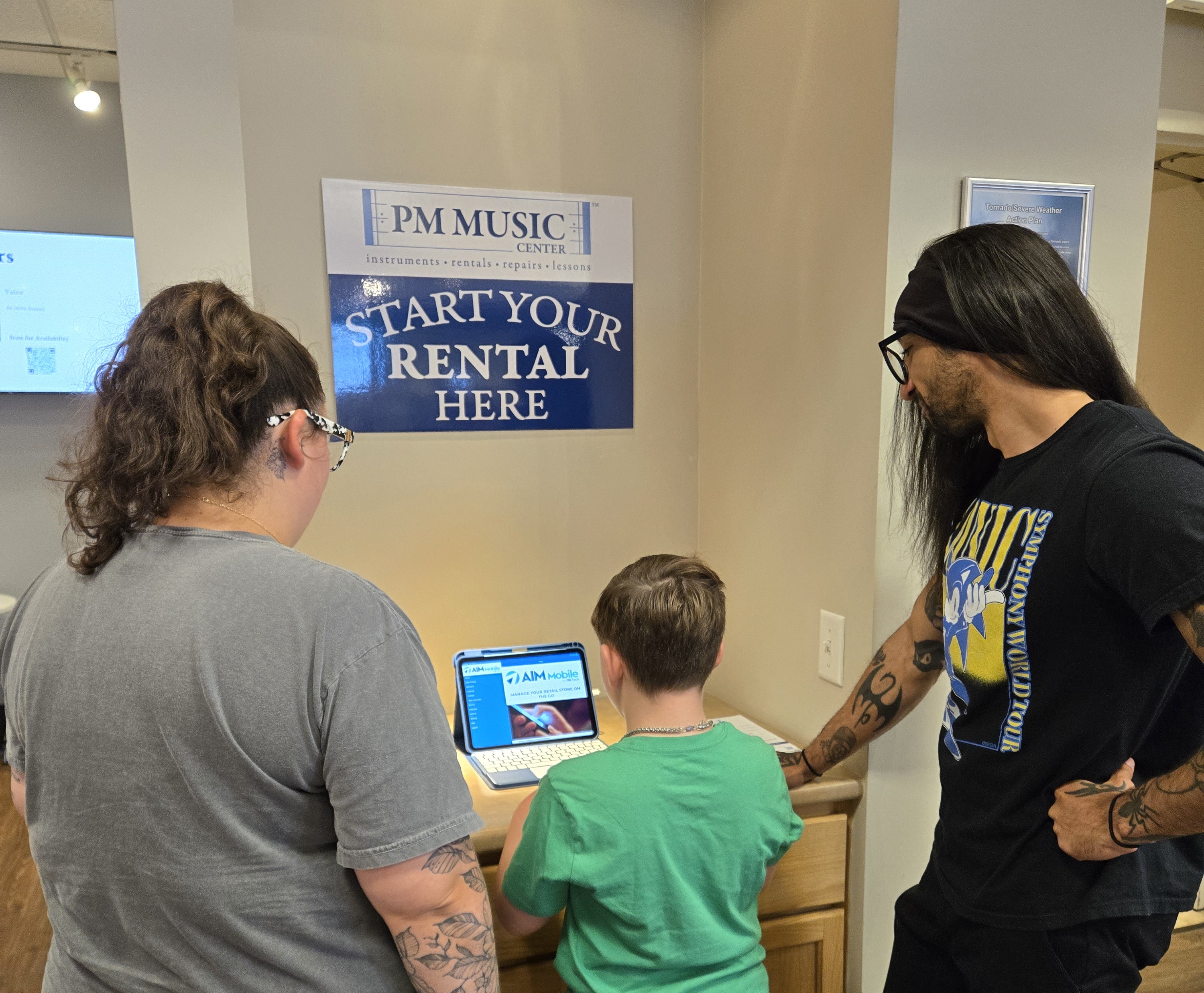
- Easy Sign Up Days: Retail partners often set up a pop-up at the school for Sign Up days at the beginning of the school year/semester. Sign up days make it super easy for students and parents to meet with the store’s team, test a variety of band director approved instruments, learn about the rental options and costs and complete any paperwork to get started if you are ready.
- Convenience: Many rental partners make weekly visits to the school to deliver rental instruments, music, accessories and repairs which saves time and money.
- Stay in tune with the Band Director: Your band director will let you know who is their recommended retail partner and what benefits you can expect through the program. An added benefit is having your band director on hand during Sign Up days to observe and weigh in on your instrument selection.
- Pre-approved instruments and accessories readily available: Instrument retailer partners, such as PM Music, work directly with the local schools and band departments to ensure that they have each school’s list of approved instruments on hand, and the inventory to satisfy their school’s departments recommendations.
Pro tip: If your student intends to keep practicing during the summer months, check with your school and their retailer to ensure that rental options will be available to you during school breaks as well. Check out our article on The Benefits of Summer Music Lessons to read more about the importance of consistent, home practice habits.
Online Rental Program
- Quick and easy (with a trade-off): While online rental programs may offer great deals and seem easier, they often don’t come with the same hands on, easily available and accessible maintenance and support that a local retailer can provide.
- Variety (with a few challenges): Online programs have a wide variety of options to consider for your rental. The challenge is, before committing to a rental program, it is highly recommended to test the instrument in person. Some online programs offer testing periods which is important to take advantage of, unfortunately, it could take a lot of time to home in on your perfect instrument. It’s important to understand that you may feel like a specific instrument is the perfect one for you, but getting a sense of how it physically feels to hold it and to make a sound is critical. As an example, the french horn is much heavier than it may seem, especially for long periods of practice time, and the trumpet requires a lot more lung power than many realize to make a sound.
- Virtual support and repairs: While some online rental retailers will offer virtual help throughout your rental period, and often allow you to send your instrument in for any maintenance and repairs, it can be a lengthier process. If you’re just weeks away from a recital or educational clinic and notice your instrument needs a quick fix, it may be difficult to ship it off with no guarantee it will be back in time. If you work with an online retailer, make sure the rental program provides flexible, affordable, and easily accessible service with quick turn around.
Pro tip: While some online retailers will connect you with a local repair shop or retailer, the fees are not always fully covered in their rental agreements, so make sure to ask about additional possible costs.
How to Rent an Instrument - Top 11 Questions To Ask
While every instrument rental retailer has their own detailed terms and conditions, here’s what we suggest you get clarity about before selecting your music rental program:
What are the terms? Are they flexible?
One of the greatest overall benefits to renting is flexibility. Look for contracts with flexible rental terms. Many program contracts will ask that you start off with an initial two or three month minimum, but allow you to rent month-to-month beyond that. Make sure the program offers flexible terms and easy cancellation options.
What is included with my rental? Are there additional costs I should be aware of?
When renting a musical instrument, all the major components should be included in the rental contract. For certain instruments however, you may eventually want to purchase additional accessories, such as an upgraded mouthpiece or reed for wind instruments or a capo for your guitar. Feel free to ask your music rental expert about what accessories or add-ons you may want to consider in the future as you progress your playing level, just to get a better sense of the instrument's long-term costs.
When renting a musical instrument, all the major components should be included in the rental contract. For certain instruments however, you may eventually want to purchase additional accessories, such as an upgraded mouthpiece or reed for wind instruments or a capo for your guitar. Feel free to ask your music rental expert about what accessories or add-ons you may want to consider in the future as you progress your playing level, just to get a better sense of the instrument's long-term costs.
What is the quality of the rental instruments? Are they new?
It is important to understand:
It is important to understand:
- Does this music retailer work with trusted, high-quality brands?
- Do they guarantee that all their instruments receive a thorough deep clean and repair between every rental?
- What formal instrument inspection does each instrument undergo before being approved for rental?
- What is the level of prior use of rental instruments? Rental instruments may not be brand new, but a good program provides rentals that are still in great playing condition.
- Pro tip: As a renter, it can be helpful to know the difference between an instrument that has some normal wear and tear, versus an instrument that is lower quality. Check out our article on used instruments for more information for what to look for in a pre-loved instrument.
What happens if I damage the instrument?
- Accidents happen and the great thing about renting is that when they do, your rental experts are there to help. Most rental contracts will include maintenance and repair, including in the case of major accidental damage.
- Look for a program with terms that specifically mention what care services are available to you, including replacement parts. If your instrument cannot be repaired in a timely manner or is beyond restoration, your program should provide you with a replacement instrument of equal quality and value.
What happens if I want to change instruments?
One of the major perks to renting is that you have the flexibility to try out multiple instruments. Look for a rental program that gives you the option to trade in your instrument for a different make, model, or style altogether, until you find the one best suited for you.
Can I upgrade and what's the cost?
- As students progress, their instrument needs may change. Make sure you select a program that allows you the flexibility to upgrade your beginner or student level instrument for an intermediate one at little to no additional cost. This is especially beneficial for string instruments such as violins, violas and cellos (click here to jump ahead to learn more about string instrument upgrades).
- Make sure to talk with your rental expert to ensure that:
- Upgrades are permitted
- Your store has those upgrades readily available/in-stock
- For more information on upgrading your instrument, check out our article on step-up instruments.
Can my rental fees apply to ownership?
- Many rental programs offer the option to accrue equity for each month you rent the instrument, to be applied to a purchase if you eventually want to shift from renting to owning. That equity can oftentimes be applied to the purchase of your specific rental instrument, or a brand new instrument of any level. Check with your supplier to see what options, discounts, financing, and rates are available to you, in case you decide you’d like to invest in a purchase in the future.
- There are a variety of ways that “rent-to-own” programs are designed; read the fine print to make sure it’s the right deal for your goals.
Are there any additional perks?
While not a make-or-break sticking point, many music retailers will offer additional discounts or specials for new renters. Perhaps they offer a discounted rate on private lessons for new renters, or maybe a discount on custom accessories or equipment.
Choosing your rental instrument
It is highly recommended to work with an instrument expert when selecting your rental. They will walk you through the process and explain and demonstrate each instrument’s unique differences, allow you to try them for yourself, and ensure that you get the right size and level instrument rental for your specific needs. As an example, you may know you’re interested in a woodwind, but maybe don’t know whether a clarinet or oboe is the right fit. This is where testing multiple instruments in person and learning from the expertise of the sales staff will be a huge help.
For a more detailed guide to instrument selection, check out our article Helping Your Child Choose the Right Musical Instrument.
Best music instruments to rent
While almost all instruments make for great rentals, here are a few instrument specific tips:
- Beginner/student level instruments: As a beginner, renting offers an important amount of flexibility and affordability until you are more clear on how you want to progress in music and what instrument you want to focus on.
- Larger Instruments: It is almost always best to initially rent larger, more expensive instruments, such as tubas, baritone saxophones, and string basses. Not only are these instruments quite expensive to purchase, they’re not easy to transport, store, or move around. Some rental programs will provide you with services to help transport and store larger instruments as well.
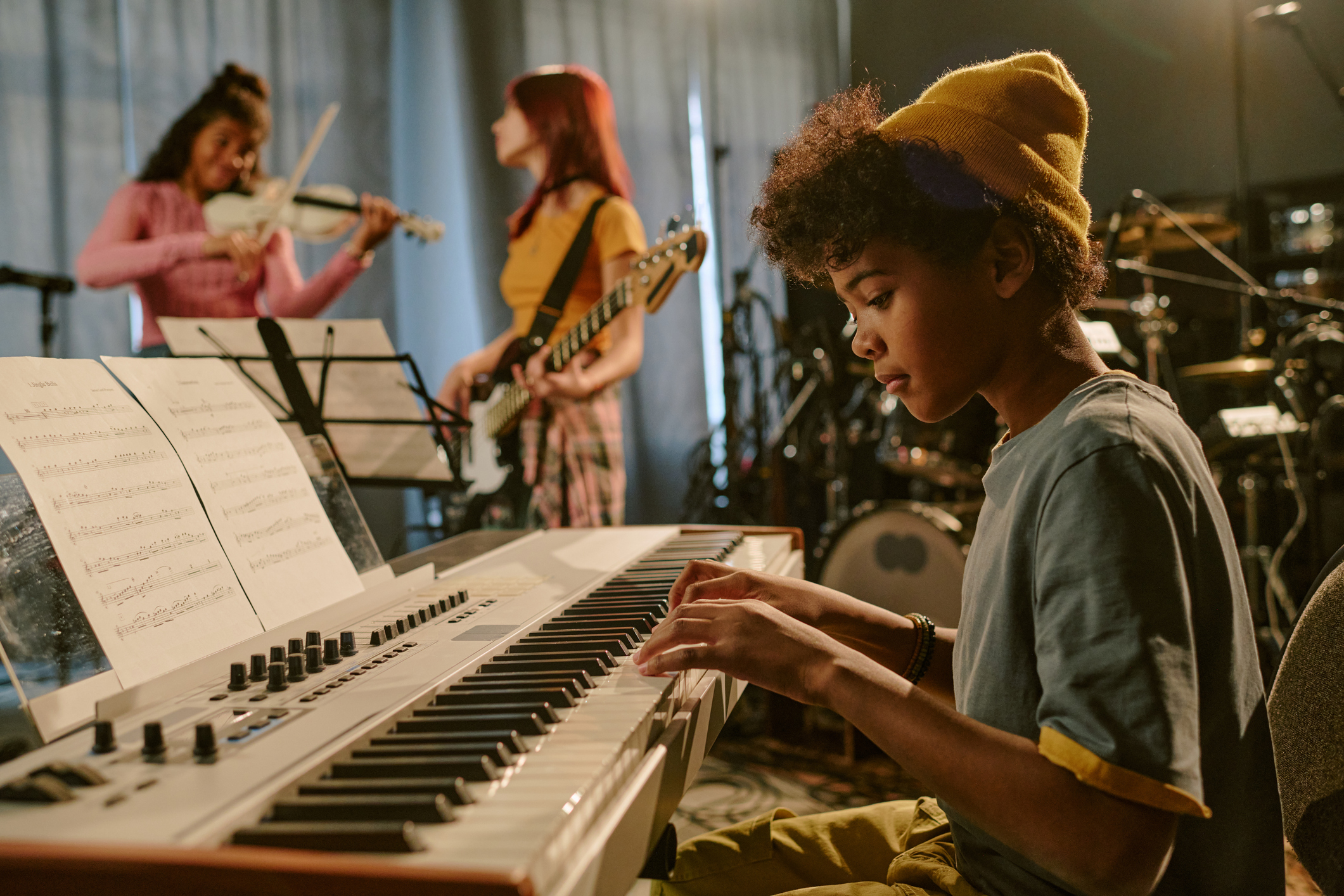
- Piano Rentals: If you’re considering a piano rental, an electronic piano keyboard can be a great starting option, as it is more portable, cost-effective, and doesn’t require a larger practice space. Good quality digital and electronic keyboards come equipped with weighted keys and sustain pedals to effectively mimic the experience of playing on a full-size piano.
- String Instruments: For string instruments such as the violin and upright bass, having the right size instrument is crucial. Fractional sized string instruments are often utilized in educational programs where children start learning the instrument at very young ages. For young students still rapidly growing, you may need to upgrade to a different sized string quite frequently. Renting allows you the option to continuously trade-in or upgrade to the instrument size best suited for you or your student’s physicality.
How to care for your music instrument rental
While every good instrument rental program will come with maintenance and repair services, your rental provider will also provide you with basic information for at home care. Following these guidelines will give you good insight into instrument ownership and full-time care. Here are just a few tips for caring for your instrument on a daily basis:
- Keep your instruments properly stored to ensure they remain in good condition between practices.
- Store instruments in their case when not in use.
- Disassemble your instrument after practice, when necessary.
- Store your instrument in ambient temperature; try not to leave it out in extreme cold or sun.
- Practice basic cleanings in between use (i.e. clean off rosin from strings, swab out woodwinds, oil your brass instruments, etc.)
- For more about instrument care, check out our article Caring for your Musical Instruments, as well as PM Music’s library for some helpful video tutorials.
Additional Pro tips for renting an instrument
- Don’t feel pressured! Take your time selecting an instrument. A good instrument retailer will work with you to try out as many instrument types and models until you find the one that is the best fit, level, and style for you.
- Understand when a beginner instrument meets your needs - Be careful of focusing too quickly on a more expensive intermediate instrument or upgrade when a beginner will do just fine. Your instructor or band director can be a great resource to help you decide when the time is right to step-up or upgrade.
- Watch out for too good to be true deals - new or like-new condition may cost slightly more than instruments that are more heavily used, but they will be higher quality/more functional and should require less maintenance.
Five Stand-Outs about PM Music Center’s Rental Program
- A team of skilled experts available to work with you every step of the way
- Close relationships with some of the top brands, including Yamaha, Jupiter, Buffet, and more, ensuring top quality instruments
- Teacher and Band Director approved
- Maintenance and repair included
- Flexible terms allowing you to change instruments, step-up to new levels, and build equity towards rent-to-own
Ready to rent an instrument?
Whether you choose to rent or buy, investing in your music practice is a big step!
We at PM Music Center are here to answer all your questions and help get you started with the perfect instrument option for you. Call us at PM Music Center (+1-630-978-9927) or head into our store today to work with our dedicated staff to learn about our rental program and get the best rental instrument for you.